A simple fact — few things change a house’s whole spirit like a pair of French doors thrown open on a bright morning. They don’t just sit there like ordinary panels. They swing wide and let the daylight roll in. If you’re thinking about swapping yours out, check this friendly guide because the small differences between French door types can turn into mighty big consequences later.
Configurations, materials, glass designs, security features, and door installation considerations for both remodels and full door replacement projects — all that is covered here. A wide opening trimmed in glass can make a tight room breathe easier and a backyard feel like part of the living room. But not every setup fits every house. Understanding structure, swing direction, and materials ahead of time keeps a fine idea from turning troublesome.
Understanding French Door Basics: What Sets Them Apart
At their core, French doors are double doors dressed up in tall glass panes that stretch nearly top to bottom. That’s the defining mark among the many types of French doors — more glass, more light, more grace.
Compared to sliding patio doors, which glide sideways on tracks, these are hinged patio doors that swing open. That swing gives them presence. Makes an entrance feel formal but welcoming all the same.
Among different types of French doors, what stays steady is symmetry. Balanced lines. A clean split down the middle. They’ve been around for centuries, and still fit right into modern Bay Area homes and old San Francisco properties alike.
Inswing vs. Outswing French Doors: Mind Your Space
When people compare inswing French doors versus outswing French doors, they’re speaking about door configuration — meaning which way the door moves.
Inswing French doors open into your living space. Handy in the Bay Area where patios might run small, but you better plan furniture around that swing.
Outswing French doors push outward. In San Francisco’s humidity, that outward seal can grant superior weather resistance. For decks and garden entries, outswing French doors often feel more natural.
Both styles count among today’s French door options, and both serve fine when matched right to the space.
Interior French Door Types: Letting Rooms Breathe
Interior French doors are very popular in home renovation work, especially round the Bay Area where people want openness without knocking down every wall.
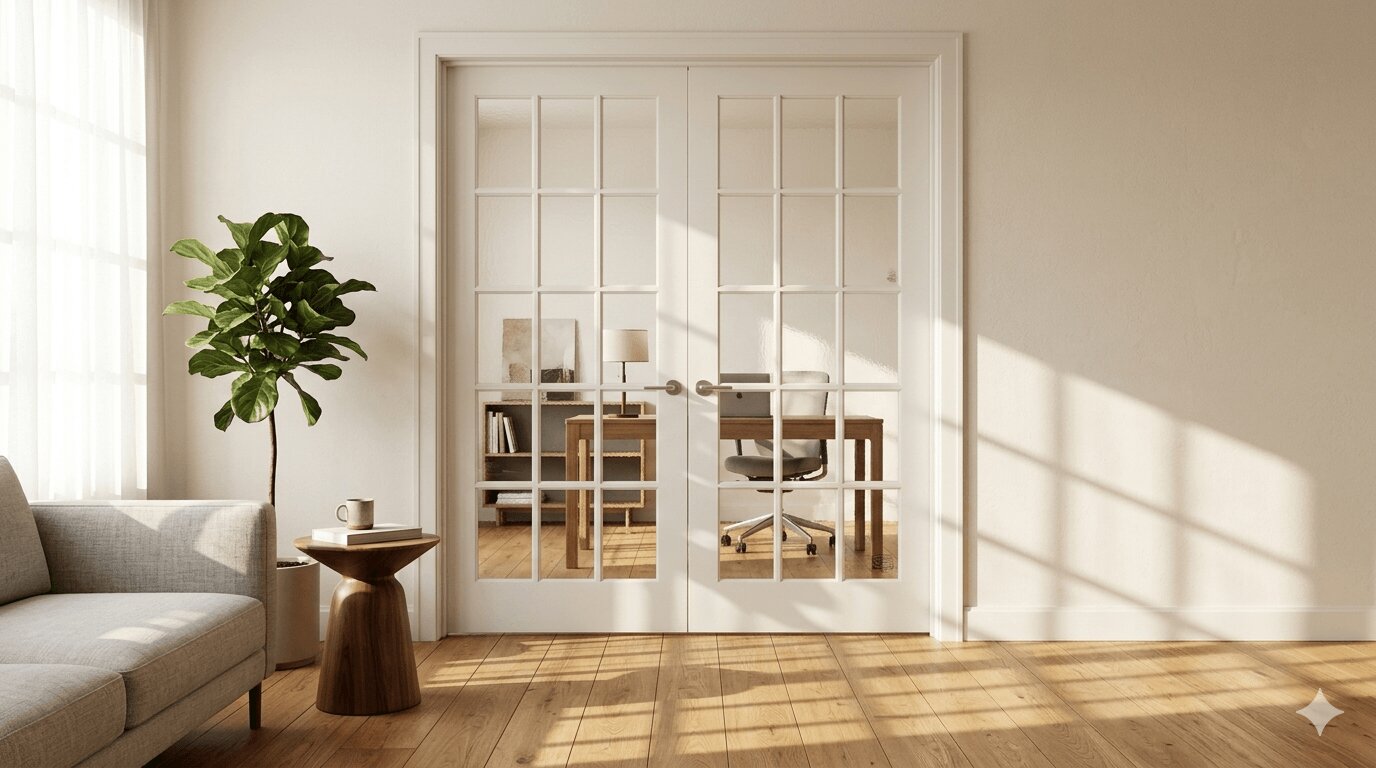
A French doors interior can be done in many different types. Hinged pairs, single doors flanked by sidelights, even tucked-away versions — plenty of options to choose from. Interior French doors let natural light drift from room to room. Spaces remain defined.
You probably wonder where interior French doors look best. Not living rooms usually. Offices, dining rooms, reading nooks — that’s where our clients get them. They add polish without closing things off completely. Among French door styles, the interior versions might just be the most versatile.
Exterior French Door Options: Built for the Elements
Exterior French doors face more than compliments — they face fog, salt air, and that coastal climate.
Wood remains a favorite for classic charm, especially near older San Francisco districts. But wood needs steady upkeep to maintain durability.
Fiberglass stands strong. It resists swelling and cracking in damp Bay Area air. Vinyl is budget-friendly. It is sturdy and durable. Design flexibility can be slimmer, though. Aluminum-clad options give extra durability when paired with wood interiors. Protective shells offer good durability.
There’s another thing known as energy efficiency. It matters too and exterior French doors improve it when enforced with proper insulation cores and Low-E glass. That’s crucial when the weather shifts from cool mornings to sunny afternoons.
Patio French doors must also hold up structurally over time. Door replacement done right ensures long-term performance.
Glass Configuration Choices: Style and Function
Glass makes the difference in French door styles. Full-lite doors give you broad, clear views. Divided-lite designs and decorative grille patterns add texture and detail.
Low-E glass supports energy efficiency by slowing heat transfer. Tempered glass improves safety. Impact-resistant options increase protection for exposed areas.
Privacy glass works wonders in tight San Francisco neighborhoods where homes sit close. These French door options let natural light in without putting your whole life on display.
French Door Hardware and Security Features
Modern French doors pack better protection than older models ever dreamed of.
Multi-point locks secure the door in several places along the frame. Strong locking systems combined with a solid handleset add dependable security features.
Quality hardware boosts home security, and proper door installation ensures those double doors close tight and square. Done right, hinged patio doors stand firm against wear and worry.
Custom French Door Solutions for Bay Area Homes
The Bay Area is full of unique architecture — Victorian homes, narrow frames, odd openings shaped by time and seismic requirements.
Window Replacement Center, a certified Milgard dealer, provides custom doors fitted to tricky spaces. Milgard products meet Title 24 energy efficiency standards and adapt to non-standard openings.
Professional door installation ensures a proper seal and structural integrity. For homeowners considering door replacement, tailored solutions prevent trouble later.
From standard swaps to detailed retrofits, French door types can be matched to nearly any setting.
FAQ
What’s the typical cost difference between inswing and outswing French doors in the Bay Area?
Outswing French doors cost a bit extra due to framing adjustments. Though in general costs are almost the same usually.
Can French doors meet California’s Title 24 energy efficiency requirements?
Yes. Exterior French doors with insulated cores and Low-E glass meet Title 24 standards. Many of them do, at least.
How do I choose between wood and fiberglass for exterior French doors in San Francisco’s climate?
Wooden doors looks fantastic. It’s a more expensive option. Fiberglass handles moisture better and shifting temperatures affect it less in coastal climate conditions.
What’s the standard size for French door openings, and can they be customized?
Standard openings for double doors often range 60–72 inches wide, but custom sizing is widely available.
Do modern French doors require special maintenance compared to sliding patio doors?
Maintenance is comparable, though hinged patio doors may require occasional hinge checks and hardware adjustments.
Ready for a Consultation?
Get a Free Estimate Today!