Imagine spending another cozy and quiet evening at your house, rain tapping the roof soft as a lullaby, and then you hear something’s wrong. The sound of a water drop hitting the windowsill. Then another. Next thing you know, water’s crawling across your sill. In such cases people usually start panicking and Google things like “my window is leaking when it rains, how can I stop it”. That ain’t just bad luck. That’s your house trying to tell you something’s wrong.
A little drip today can turn into rotten wood and busted drywall tomorrow. We’re gonna walk through why it happens, how to track it down, what you can fix yourself, and when it’s time to call in somebody with more tools than pride.
Why Windows Leak During Rain: Common Causes
If you’ve got a window leaking when it rains, there’s always a reason. Most window leaks start with tired window weatherstripping, cracked window caulking, or busted window sealant. That seal around the frame gets brittle, splits, forms a gap or a fine little crack you barely see. Then heavy rain finds it. Water intrusion doesn’t need much of an invite.
Sometimes it’s clogged weep holes. Sometimes it’s bad window installation from years back. Sometimes the house settles just enough to twist the frame out of the square. And when a hard storm rolls in that’s when you suddenly see rain coming through window corners like it’s got business inside.
People in San Francisco know how it is. Bay Area windows might sit peaceful nine months out of the year, then heavy rain hits sideways and exposes every weakness. That’s when leaking windows show their true colors.
If your window is leaking, don’t ignore it. A small leak turns into water damage later. And mold never asks for no permission.
Identifying Where Your Window Is Leaking
Check the whole window frame: top, sides, windowsill. Run your hand along the frame after a heavy rain. Feel for moisture. Look for a crack in the caulk line. Peek behind exterior trim if you can. Water loves sneaking behind things.
If there’s rain coming through window joints near the sill, that might be drainage trouble. If it’s showin’ up along drywall beside the frame, you could be looking at moisture infiltration from the wall itself.
And don’t confuse condensation with a true window leak. Condensation stays inside the glass. But water running down from the head of the window during rain means intrusion. A leaking window leaves clues. You just have to look patiently.
Weatherstripping and Seal Failures
There’s a simple thing that causes a lot of worry: worn window weatherstripping.
Window weatherstripping presses tight when the sash closes. Over time, it dries, shrinks, cracks. Seal failure happens quietly. Then one day under a heavy rain water sneaks in.
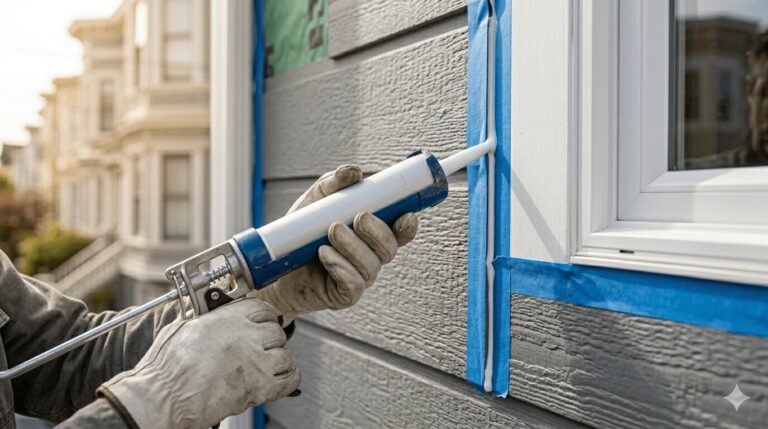
Window caulking does the same thing. Old caulk splits from the frame. A little gap can be an open door for the rain. Window sealant around joints loses flexibility and the seal breaks down. In places that get wind-driven rain, like parts of San Francisco, those weak spots get tested hard. A leaking window during rains often traces right back to weatherstripping and caulk.
Replacing window weatherstripping and fresh window caulking can stop a window leaking when it rains.
Installation Problems That Cause Window Leaks
Now here’s where it gets serious. Bad window installation can haunt you years later. Improper window flashing lets water slip behind siding. If flashing ain’t layered right, the drainage system fails before you even know it.
If the sill ain’t sloped outward, water pools instead of draining off. If the rough opening wasn’t sealed tight, moisture infiltration creeps in with every heavy rain. You might fix a little leak, think you’re done, then another storm hits and the window leaking during rain starts again. That’s usually structural.
One of our clients said recently: “When my window is leaking again after repairs, I start suspecting flashing and installation”. That person thinks the right way. Sometimes it takes a seasoned contractor to pull back trim and see what’s going wrong.
Clogged Weep Holes and Drainage Issues
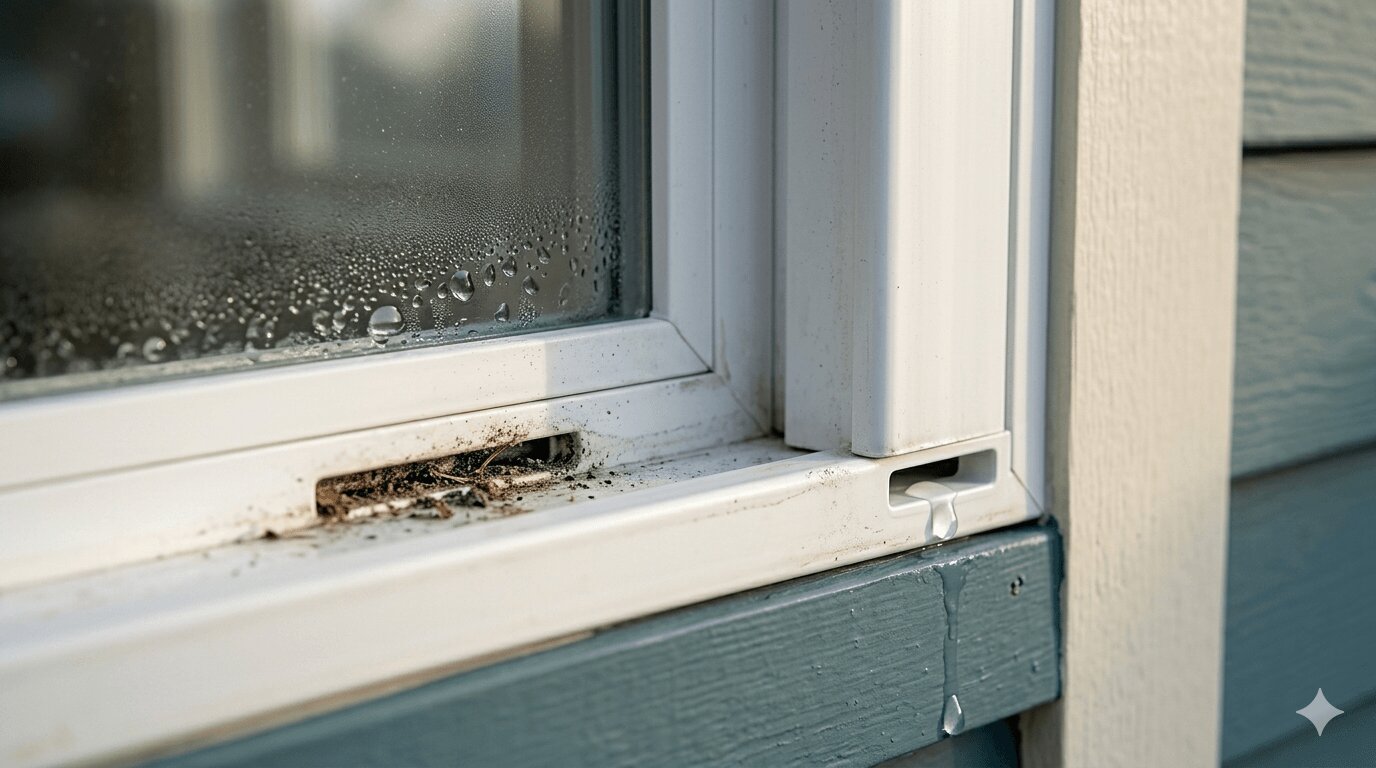
Modern windows, especially vinyl and aluminum ones, got weep holes built into the bottom frame. Those weep holes are part of the drainage system. They let trapped water escape. If dirt or debris blocks the weep holes, water backs up. Next thing you know, you think you got a major window leak, but really it’s just clogged drainage.
Take a small wire, clear the weep holes. Don’t seal them shut since they’re supposed to be open. Clean weep holes are essential for Bay Area windows dealing with steady rain cycles. Four tiny weep holes can be the difference between dry floors and soaked drywall.
Quick Fixes for Leaking Windows
The question we hear every week: “If my window is leaking right now during a storm, what do I do?”
First, contain the water. Towels. Buckets. Keep water off wood to prevent rot and mold. Next, dry everything as quickly as you can. Once rain slows, inspect for crack lines, loose caulk, worn window weatherstripping. Apply fresh caulk where needed. Reinforce window caulking along the sill and frame.
Clear the weep holes again. Check for visible seal failure. These steps might stop minor leaking windows. But if you have to Google “window leaking during rain” again, you’re beyond a quick fix.
When to Replace Rather Than Repair
Some window leaks are just too stubborn. If the frame’s rotting, if water damage spreads into the wall, if mold keeps showing up no matter what you seal — that’s when window repair turns into window replacement talk.
Old replacement windows from decades ago may not have proper window flashing or modern sealing systems. Replacing them with updated replacement windows can dramatically cut future leak risk. When heavy rain exposes chronic leaking windows year after year, window replacement often becomes the smarter long-term fix.
Talk to a contractor who understands professional installation. Proper flashing, proper drainage system setup, tight sealing. That’s how you stop the problem for good.
Preventing Future Window Leaks
Prevention’s quieter than repair, but a whole lot cheaper. Do regular window maintenance. Check window weatherstripping once a year. Inspect window caulking. Make sure weep holes stay open. Look for early signs of water damage or moisture near the sill.
After every major storm, walk the house. Feel along the frame. Catch small leak problems before they grow teeth. In climates like San Francisco, wind-driven rain hits at angles you don’t expect. Keep seals tight. Maintain flashing. Don’t ignore little crack lines.
A single window leak ain’t just about a wet floor. It’s about protecting your home from water intrusion, mold, rot, and years of creeping damage. That’s a fight you’d rather win early, not late, when the whole wall is coming apart.
Ready for a Consultation?
Get a Free Estimate Today!