
If you hear an unusual rattling sound when the wind hits your house that ain’t ghosts. That’s your windows asking for help. Most people ignore it. Then one storm rolls through San Francisco, the panes start shaking, and suddenly everybody’s Googling “how to fix rattling windows” at midnight.
Windows start making noise long before they fail. Small gaps, loose parts, or shifting frames cause vibration that grows louder over time. Some fixes are simple weekend work. Others point to deeper structural problems worth addressing early.
Opening Brief: What’s Actually Going On
Rattling windows usually happen because something’s loose. Worn weatherstripping, aging window frames, slack window hardware, maybe a drifting window sash that’s not sitting tight anymore.
In the Bay Area and older San Francisco neighborhoods you’ve got a little settling foundation action, some salty air, steady coastal winds, and that’s it — you get your windows rattling in the wind.
Most of the time you can fix rattling with targeted window repair. Sometimes it’s a bigger problem, though.
Why Windows Rattle: Common Causes in Bay Area Homes
First off, worn-out weatherstripping can be the reason. Once it compresses and flakes out, you get air leaks. Those leaks create drafts. Drafts mean movement.
Second, loose window sash components. Especially in older double-hung windows. That sash should sit firm inside the window frames. When it doesn’t, you get to deal with the rattling.
And don’t forget sliding windows. If the rollers wear down or the track is off, you get rattling sliding windows every time the wind shifts.
In some San Francisco homes, deteriorated glazing compound around the glass contributes to window rattling too.
Add strong coastal winds, and suddenly minor looseness turns into real window noise.
Quick DIY Fixes for Rattling Windows
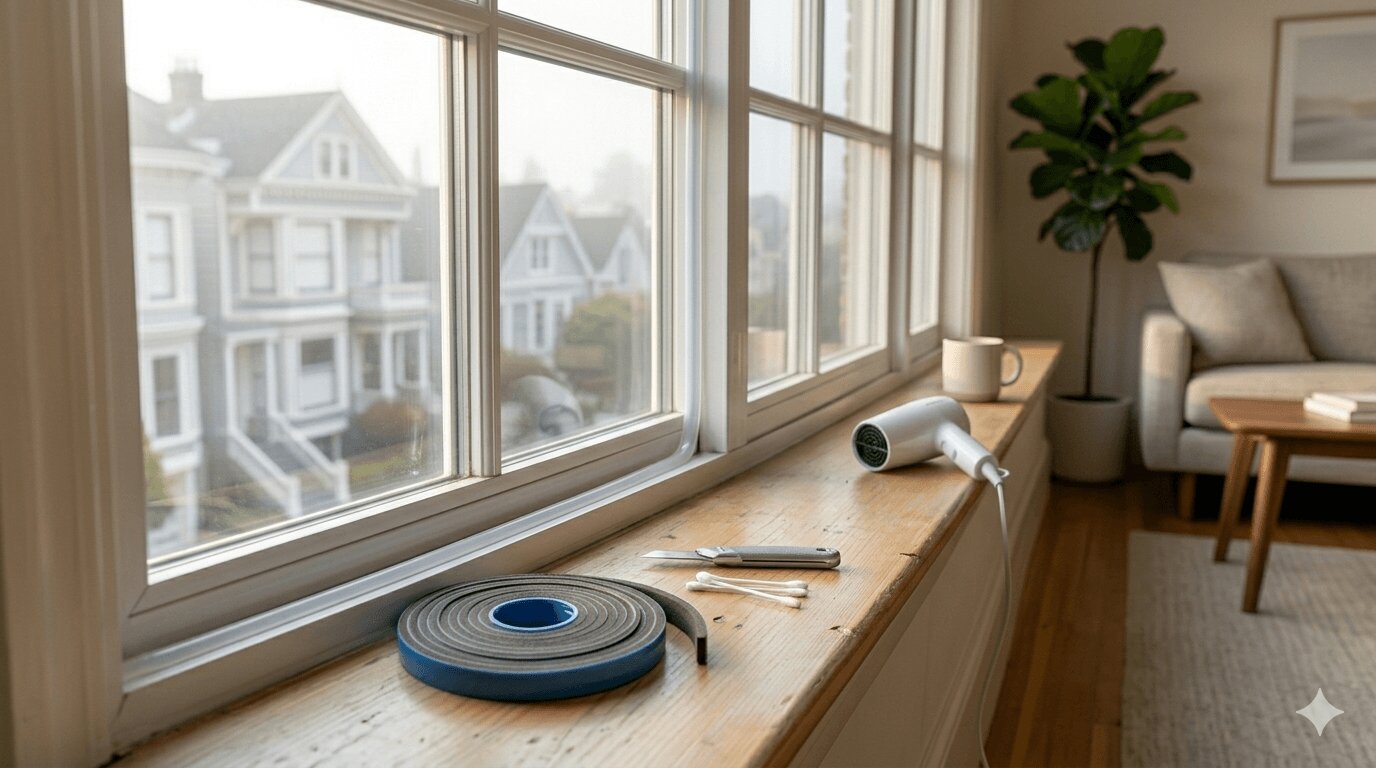
Now let’s talk about DIY solutions. Start with new weatherstripping. Cheap, effective. Foam tape works fine for small gaps. For vertical edges, try V-strip weatherstripping. It holds tighter over time.
Check your window hardware. Tighten screws. Inspect the window sash. Adjust those sash locks on double-hung windows so everything clamps down properly.
For rattling sliding windows, clean the tracks and check alignment. Sometimes adding window inserts or basic draft stoppers can stop windows from rattling instantly.
A coffee break job. Though usually it works.
Weatherstripping Solutions That Actually Help
Not all weatherstripping is equal. In the Bay Area climate with all those foggy mornings, and hot afternoons cheap materials break down in no time.
Silicone-based weatherstripping lasts longer. Good compression reduces air leaks and improves energy efficiency. That means fewer drafts, less window noise, better comfort.
Apply it where the window sash meets the frame. Measure carefully. Too thick, and your window won’t close. Too thin, and you didn’t really fix rattling.
Done right, it even helps with mild noise reduction when you’ve got windows vibrating during a storm.
When Rattling Means Bigger Trouble
Now here’s the serious part.
If you’ve got visible gaps, moisture between panes, or signs of moisture damage, that’s not just basic rattling windows anymore.
Look for rotting frames, persistent loose windows, or sticking tracks in sliding windows. Those are potential structural issues.
If repeated window repair attempts don’t hold, and you’re constantly trying to stop windows from rattling, it may be time to ask bigger questions.
Professional Repair vs. Window Replacement
Professional window repair usually gives better results in replacing weatherstripping, reinforcing window frames, and tightening components if you don’t have much experience in fixing things.
If the energy efficiency of your house is suffering then full window replacement starts making sense. Heating bills getting expensive is a common sign of trouble.
Modern vinyl windows seal tighter. Quality systems reduce window rattling long-term. Proper professional installation matters more than people think. A certified installer will usually provide a free estimate, evaluate the noise source, and explain whether targeted window repair or complete window replacement makes more financial sense.
In San Francisco, with aging housing stock, that conversation happens a lot.
Choosing Rattle-Resistant Windows
If replacement’s the call, look for sturdy vinyl windows or solid fiberglass frames. Good locking systems secure the window sash firmly. Proper sizing during professional installation prevents future loose windows.
Brands like Milgard build systems designed for durability and strong energy efficiency. A reliable window warranty covering operational issues gives peace of mind too. Quality materials plus accurate install? That’s how you avoid this conversation again in five or more years.
Bay Area Climate Considerations
The Bay Area isn’t gentle on houses. San Francisco fog, inland heat shifts, and steady coastal winds test every joint and seal. Homes near the water experience stronger pressure differences, which amplifies window rattling.
Proper sealing and anchoring during window replacement are critical in high-wind zones. Sloppy install means repeat problems. So when someone asks how to stop the noise for good, the honest answer is simple — secure structure, quality materials, tight weatherstripping, and precise fit.
If your place has rattling windows, don’t ignore it. Small fixes often solve it fast. But when vibration keeps coming back, or when window noise turns into noticeable drafts, that’s when window replacement deserves consideration.
In the Bay Area staying ahead of these issues protects comfort, improves energy efficiency, and keeps your place safe Check your windows before the next storm rolls through.
Ready for a Consultation?
Get a Free Estimate Today!