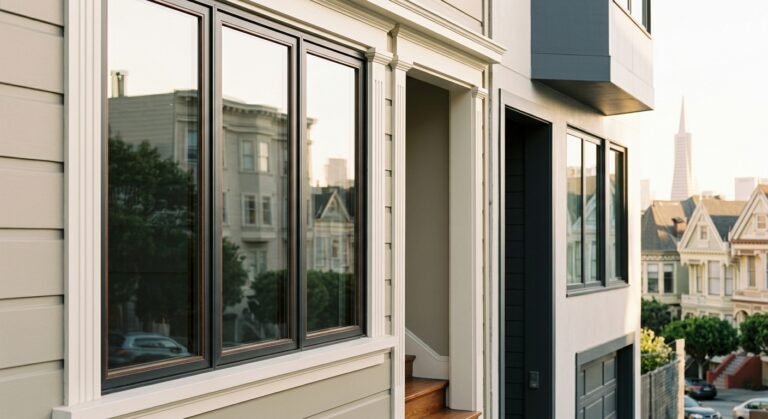
You probably know how it feels when you sit in your own living room with the heater running and there’s still that sneaky little chill brushing past your ankles. That’s your windows whispering that you forgot about them. In the Bay Area, with our moody skies and sideways drizzle and those weird 40-degree nights after a sunny afternoon, learning how to weatherproof windows isn’t optional. It’s making sure you and your family feel safe at home no matter how gruesome the weather outside can be.
This friendly guide isn’t like those glossy magazines full of ads. It’s the real rundown on sealing up your place so it feels steady, dry, and sane no matter what the forecast is pulling. We’re talking about practical fixes, smart upgrades, and where not to waste your money.
Why Weatherproofing Windows Matters in the Bay Area
The Bay Area doesn’t play fair. You wake up in San Francisco with coastal fog crawling up the siding, drive for twenty minutes, and it’s ten degrees warmer. That daily swing expands materials, shrinks them back, and opens up gaps. Those gaps become air leaks. Those leaks turn into drafts. Those drafts quietly spike energy costs.
When you weatherproof windows, you’re cutting heat loss, lowering energy costs by 10% to 25%, and guarding against long-term moisture damage. That’s what energy efficiency means. From fog-drenched corners of San Francisco to warmer inland stretches near San Jose, around the Bay Area weatherproofing windows means layering techniques: weatherstripping, caulking, window insulation, sometimes window film, sometimes more. Could be $50 in DIY solutions. Could be bigger. Depends how leaky things got.
Real energy savings show up on the bill, not just in theory. Honestly, the best way to weatherproof a place in the Bay Area is doing a complex job. Not one fix. A system.
Best Weatherstripping Materials and Application Methods
If you’re serious about how to weatherproof windows, you better learn more about weatherstripping things properly. Do it wrong, you still get drafts. Do it right, and you get smooth seal, smooth slide.
Here’s the list of the most common options:
- V-strip: bronze or vinyl, solid for double-hung windows, snaps back into shape, keeps tension
- Foam tape: quick, cheap, good for uneven spots
- Rope caulk: temporary, seasonal, like a winter jacket for your frame, silicone and EPDM are both durable options.
Apply V-strip along the sash channels. Use foam tape where tiny gaps create obvious air leaks. Clean surfaces first. Don’t slap weather stripping onto dust and hope for miracles.
For double-hung windows, seal along the meeting rails. For casement windows, run it along the compression points so it closes tight but still opens.
That’s proper window sealing. Clean. Controlled. Functional.
Caulking and Sealing: Interior vs. Exterior Applications
Now we get into caulking. Weatherstripping handles movement. Caulking handles stillness.
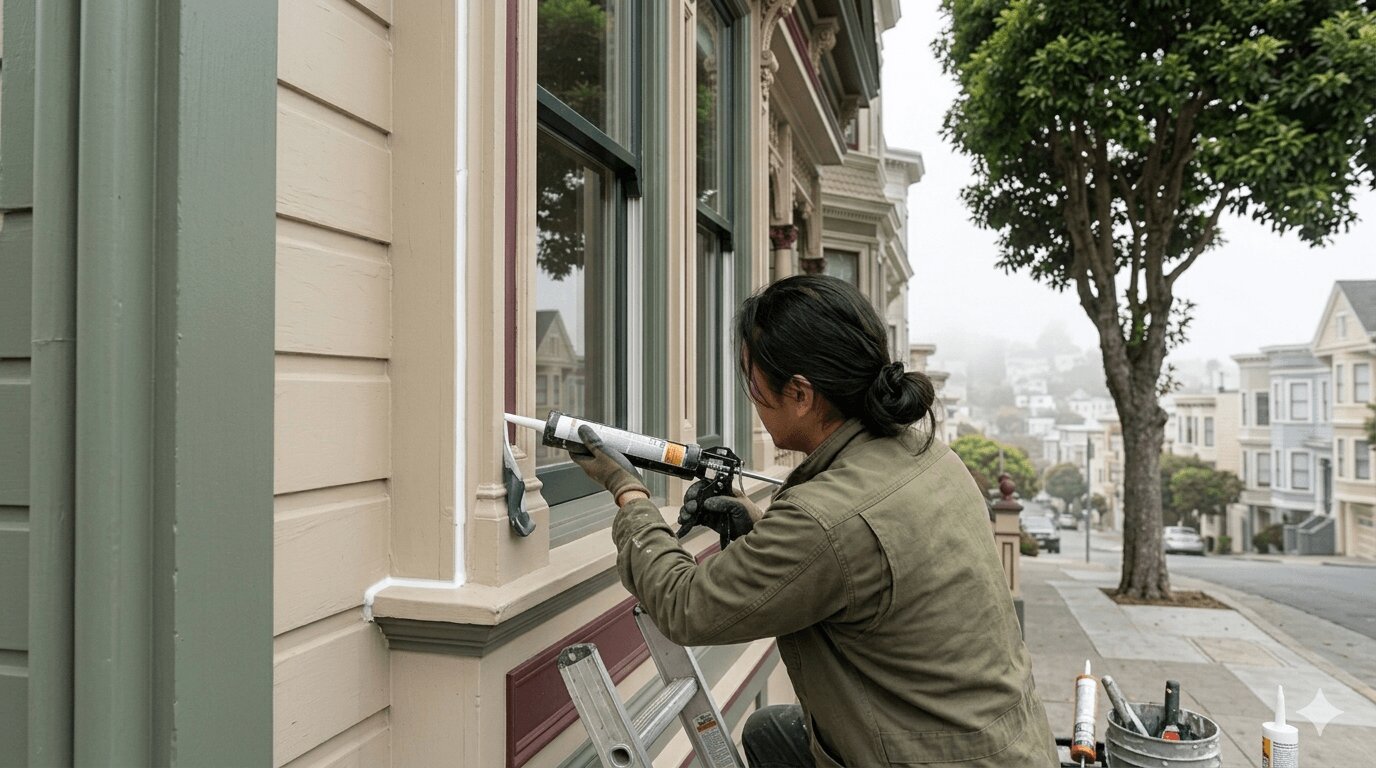
Inside, around window trim, use paintable acrylic latex. Outside you should use something more durable, like silicone caulk or polyurethane rated for exterior weatherproofing. It matters a lot in the Bay Area, where moisture lingers.
You hunt down air leaks with your hand on a cold morning. Seal the joints where the frame meets siding. Don’t block weep holes or you end up trapping condensation. That’s no good.
Use exterior-grade silicone caulk when sealing outside gaps. That’s really vital. Good window weatherproofing blends caulking and weatherstripping smartly. Overdo it and you create problems. Underdo it and nothing changes.
Weatherproofing Old Windows vs. Replacing Them
Now here’s the debate. Do you weatherproof old windows or go full window replacement mode?
DIY weatherproofing might cost $50 to $200 per unit. New installs? $300 to $1,200 and more. Depends on materials.
You can weatherproof old windows if the window frames are solid and the glass isn’t failing. For rentals, budget constraints, and historic homes it makes sense. But if old windows are warped, single-pane, rattling even after window sealing, and letting the air through like crazy then window replacement delivers better energy efficiency long-term.
The best way to weatherproof isn’t always patching. Sometimes it’s replacing.
Window Film and Insulation Solutions for Energy Efficiency
Supplemental moves count. Shrink-wrap insulation kits create an interior air pocket in winter. Magnetic storm windows add removable layers without ripping frames apart. Good play for old windows in heritage homes.
Add window film, especially low-E film, and you improve solar control. Solid move in mixed Bay Area climates. It enhances window insulation, reduces UV, improves comfort.
Layered window weatherproofing boosts energy efficiency quietly. Not flashy. Effective. And yeah, this is still part of learning how to weatherproof windows right.
Weatherproofing from the Outside: Techniques and Materials
Now we step outside. Careful with ladders, especially those tall skinny homes in San Francisco. Check flashing above the frame. Make sure water sheds properly. Inspect window frames for peeling paint or cracks. Reseal exposed wood.
Clean the weep holes, don’t clog them. That’s basic exterior weatherproofing discipline. Apply proper exterior caulking along perimeter joints. That’s real exterior weatherproofing, not cosmetic patchwork. If it’s multi-story and sketchy, calling professionals would be a good choice.
Common Weatherproofing Mistakes to Avoid
Here’s where people usually mess up. They overdo caulking and trap moisture. They slap interior sealant outside. They ignore rotted spots on window frames. They apply foam tape before cleaning the surfaces properly. They paint over weatherstripping. They seal over weep holes and wonder why rot shows up. We’ve seen enough of all that to make sure you get enough data on how not to weatherproof if you want things to look good for years.
When you’re weatherproofing windows you have to be methodical. Balanced. Make clean lines. No panic fixes.
If you want lower energy costs, fewer drafts, less heat loss, and real energy savings, you have to learn how to weatherproof windows properly. Not halfway. Layer weatherstripping. Thoughtful caulking. Strategic window film applying. Supplemental window insulation. Smart exterior weatherproofing.
Do that, and you don’t just weatherproof. You stabilize your home against the weird rhythm of the Bay Area climate.
Ready for a Consultation?
Get a Free Estimate Today!