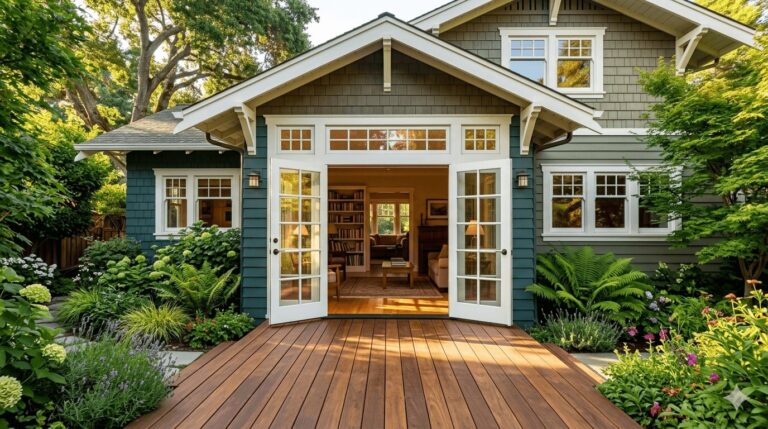
“We were quoted both Marvin and Milgard. What’s the real difference?” This comes up a lot. Usually right after the homeowner sees the two numbers sitting next to each other and starts wondering whether the more expensive window is actually better—or whether they’re just paying for the logo.
Fair question.
Marvin vs Milgard windows isn’t really a battle between a “good” product and a “bad” one. They’re built around different materials, product ranges, customization levels and price points. And San Francisco makes that distinction a little more interesting.
A Victorian with original proportions has different problems from a 1980s Peninsula house. A custom opening is different from a standard replacement window. A rental unit doesn’t need the same conversation as a carefully restored Edwardian.
Let’s get into the actual differences.
Milgard: Practical, Familiar, and Easier on the Budget
Milgard has traditionally occupied the more accessible part of the replacement-window market, particularly with its vinyl products.
Its lineup includes Style Line, Trinsic and Tuscany vinyl windows, along with the fiberglass Ultra series and thermally improved aluminum options. Milgard’s own comparison chart places the series across different price levels, from the more economical Style Line through higher-priced fiberglass and aluminum products.
That’s the appeal. You can get a modern, energy-efficient replacement window without immediately turning the project into a small architectural event.
Depending on material, size, configuration and glass package, rough material-only pricing can range from around $130 for basic vinyl units into the low thousands for larger or more elaborate products. The number gets much higher once you’re talking about oversized units, specialty configurations and installation.
So when you’re searching “Milgard windows cost” online, don’t get too attached to one number you found. A 30-by-48 vinyl window and a huge custom opening aren’t remotely the same purchase.
Milgard tends to make sense for practical remodels, standard openings, rental properties, secondary windows and projects where you’re trying to control the budget without buying the cheapest thing available.
Sometimes that’s exactly what you need.
Marvin: More Customization, More Materials, More Money
Marvin plays a different game.
Its collections span fiberglass, wood, aluminum-clad wood and other premium configurations, with options for standard and custom sizing depending on the collection. Current Marvin collections include Essential, Elevate, Ultimate, Modern, and Vivid products, with the exact lineup depending on the product category.
The higher-end collections are where the customization starts getting interesting.
Different wood species. Exterior colors. Hardware. Glass options. Specialty shapes. Custom sizing. And suddenly the window isn’t just filling a hole in the wall. It’s part of the house. That matters in San Francisco, where the window can be a surprisingly large part of the building’s character.
For Marvin windows cost, rough material-only pricing can run from several hundred dollars for simpler configurations to $4,000 or more for large, highly customized units. Third-party pricing guides put many Marvin products considerably higher than standard vinyl replacements, particularly once you move into premium wood and clad-wood configurations.
Again, window pricing is annoyingly dependent on size, material, glass, configuration, color and installation conditions. A custom Marvin isn’t simply “the same window as Milgard but more expensive.” It’s often a different specification entirely.
Marvin vs Milgard Windows: What’s Actually Different?
Here’s where the comparison gets useful.
| Milgard | Marvin | |
| Main materials | Vinyl, fiberglass, aluminum | Fiberglass, wood, aluminum-clad wood and other premium materials |
| Customization | Good, with custom sizes available in several lines | Extensive, especially in higher-end collections |
| Typical position | Practical replacement or remodel | Premium replacement, remodel and design-driven projects |
| Historic-style projects | Possible, depending on design | More options for matching traditional architecture |
| Non-standard openings | Available in selected series | Strong fit for custom sizing and specialty configurations |
| Price | Generally lower | Generally higher |
Milgard’s own product chart shows custom sizing across several series, so “Milgard equals only standard windows” would be too simplistic. Marvin, though, goes much further into made-to-order territory, particularly with the higher-end collections. Its Ultimate line, for example, offers wood interiors, aluminum-clad exteriors and extensive design options.
That’s where the price difference starts making more sense. You’re paying for more than glass and a frame. You’re paying for options.
Which One Fits a San Francisco Home?
Take a Victorian or Edwardian with a distinctive original facade. The proportions matter. The sightlines matter. The material matters. The wrong replacement window can make the exterior look slightly off. And “slightly off” on a historic San Francisco house has a way of becoming very obvious.
San Francisco’s historic-preservation guidance specifically addresses replacement windows and calls for replacements to match the historic windows in shape, size and materials in certain historic contexts.
That’s a situation where a highly customizable Marvin configuration can make sense.
Now take a standard Peninsula or South Bay house with ordinary rectangular openings and a homeowner who mainly wants better-performing windows without turning the project into a custom millwork exercise. Milgard may fit that project perfectly well. Then there’s the new build or major remodel with huge, unusual openings. That’s where the ability to order specific sizes and configurations becomes more important, and Marvin’s premium collections are designed around that kind of flexibility.
And a rental property? Different math.
If the goal is to replace a batch of aging windows, keep maintenance reasonable and avoid spending heavily on customization nobody is going to appreciate, a practical Milgard configuration may make more sense. There’s no prize for putting a $4,000 window in a room where the only person who notices it is the contractor.
FAQ
Is Marvin really significantly more expensive than Milgard on average?
Generally, yes, particularly when comparing premium Marvin wood or clad-wood products with standard Milgard vinyl windows. But the comparison gets less dramatic when you’re comparing similar materials and configurations.
A basic Milgard window and a custom Marvin Ultimate aren’t really apples and apples. More like wonderful apples and a very expensive fruit basket.
Can you mix brands in one home?
Yes. There’s nothing inherently wrong with using Milgard on secondary elevations and Marvin on prominent or historically sensitive openings. The trick is making the finished house look intentional rather than accidental.
Which brand has the better warranty?
The answer depends on the exact series, product, ownership situation and warranty terms. Milgard offers substantial lifetime coverage on qualifying products and customers, while Marvin’s coverage varies by product and component. Read the warranty for the exact model you’re buying.
Is Milgard a good fit for historic San Francisco homes?
It can be, depending on the house and the specific window. The issue isn’t simply the brand. It’s whether the selected window can reproduce the required proportions, materials, profiles and appearance. For a protected or historically significant property, check the applicable local requirements before ordering anything.
How much longer does a custom Marvin order take compared with Milgard?
Custom Marvin orders generally involve more choices and manufacturing steps, so they can take longer than a readily available standard product, but actual lead times change with collection, size, finish, glass, order volume and dealer availability. Ask for the current lead time on your actual quote.
Ready for a Consultation?
Get a Free Estimate Today!