
Window Replacement Permits in San Francisco: Complete Guide
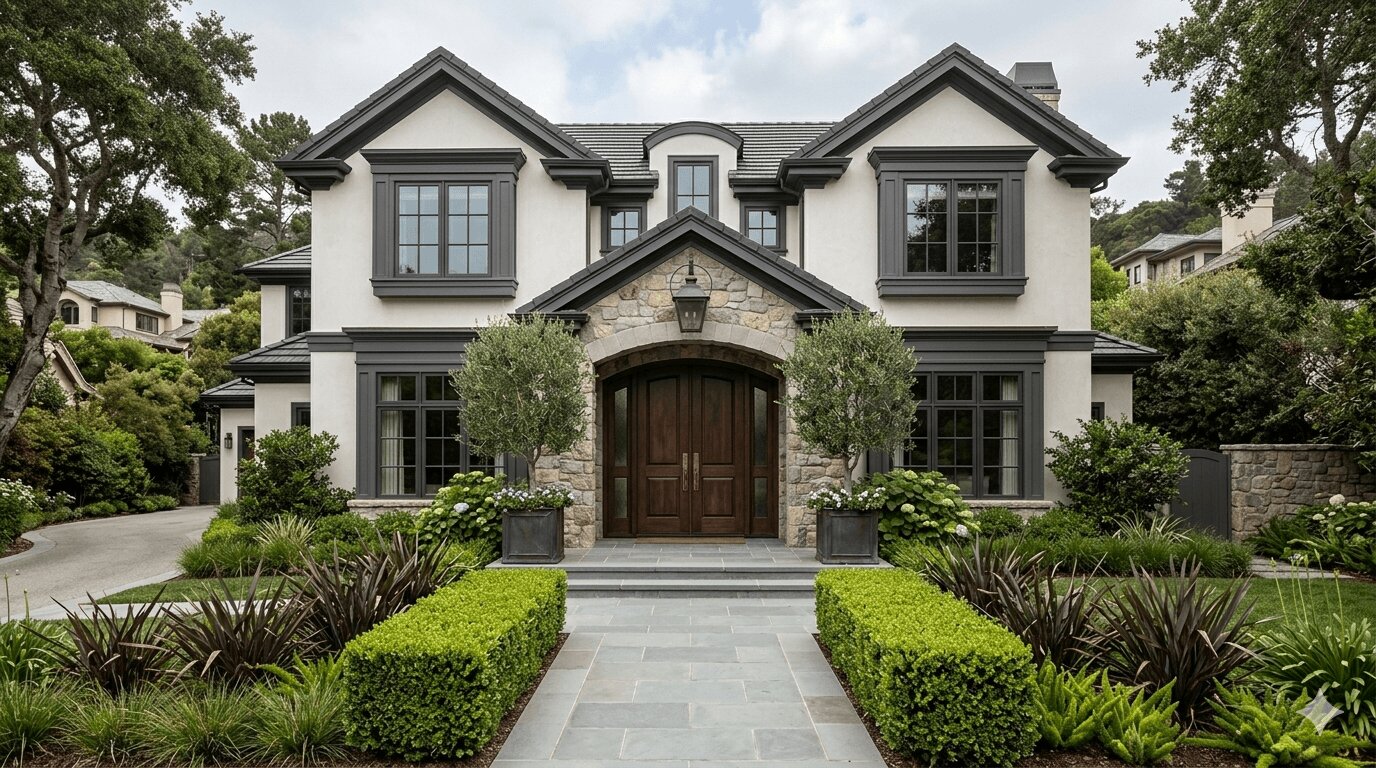
If you think swapping out a couple old windows would be a simple job you’ve got to be careful. It’s more than just pulling the old ones out and popping the new ones in. Not in San Francisco. Down there, even a basic window replacement can turn into a paperwork saga if you don’t know the rules. So before you order shiny new replacement windows, let’s talk about the permit side of this thing. It matters a lot.
San Francisco has some of the strictest permit requirements in California. Permits are mandatory for most exterior window replacement projects there. Especially in a historic district. Some simple replacement jobs may qualify for an OTC permit, though.
Understanding these permit requirements is vital if you don’t want to get fined. It also keeps your property value solid in one of the most regulated markets in the Bay Area.
When You Need a Permit for Window Replacement in San Francisco
A question we hear every week from our customers — “do you need a permit to swap out windows?”
You do when in San Francisco. Most of the time. Here’s what you’ll need a window replacement permit for:
- Changing the opening size
- Moving the window location
- Altering the exterior appearance
- Converting window styles
- Making structural changes
- Working inside a historic district
Even dealing with standard replacement windows often require a building permit if the exterior is involved. If it’s a pure like-for-like replacement you might qualify for an OTC permit. Same size, same type, no structural tweak.
Compared to other Bay Area spots like Oakland or San Jose, the oversight is tighter. That’s just how they roll.
San Francisco Building Code Requirements for Replacement Windows
Alright, lean in for this part. Any window replacement that gets approved has to meet modern building code standards. And not the old ones. Only current ones will do. Always check for updates.
Here’s the list of what to take a closer look at:
- Title 24 energy efficiency compliance
- Proper egress requirements for bedroom windows
- Tempered glass in required areas
- Fire-rated windows where code demands them
- Wind load ratings
- Local seismic requirements
Those are the official building code requirements usually checked during any inspection. It doesn’t matter if it’s one window or ten. If you’re pulling a permit to replace windows, you’re playing by today’s rules, not 1972’s.
San Francisco Planning Department Window Replacement Standards
Now here’s where it gets serious. The planning department and SF Planning layer design rules on top of safety rules. Especially if your place is in a historic district or falls under Article 10 or Article 11. We’re talking about historic preservation. Muntin patterns. Frame materials. Matching original profiles on Victorian homes.
You might want vinyl. They might want wood. That’s a conversation. This is where a simple window replacement turns into design review. It can really affect the timeline.

Over-the-Counter (OTC) Permits vs. Full Building Permits
Let’s take a closer look at their differences. An OTC permit, also known as an over-the-counter permit, is for straightforward like-for-like replacement jobs. No size change. No structural shifts. No major design impact.
You walk in, submit docs, pay permit fees, and sometimes you’re approved the same day or within a few days. A full building permit? That’s when you’re changing openings, modifying structure, or triggering historic review. That can take weeks, sometimes months.
Cost-wise, an OTC permit might run $200 to $500. Maybe more. It depends. A full building permit can push $500 to $2,000 and more, depending on complexity. Knowing which type of window permit you need makes a big difference.
How to Apply for a Window Replacement Permit in SF
Speaking about the paperwork. The permit application process usually involves this:
- Accurate measurements and product specs
- Energy documentation proving Title 24 compliance
- Plans if structure changes
- Submission through DBI
- Payment of permit fees
- Scheduling required inspection
A reliable certified installer will handle most of that. But homeowners are still responsible for making sure the window replacement permit gets issued. Another important thing — you’ll need to pass the inspection before the job is officially closed out.
Permit Costs and Inspection Requirements
Let’s talk dollars. Basic projects usually cost a few hundred in permit fees. Bigger projects cost more. Especially if plan review is required.
Every permitted window replacement job includes at least one inspection. Always. That’s what inspectors check for:
- Proper flashing
- Secure anchoring
- Compliance with current building code
- Verified energy performance
Failing an inspection means corrections and another visit. Nobody wants that. A final sign-off from building inspection means code compliance. That helps later during refinance or home sale.
Consequences of Unpermitted Window Replacement
Now here’s the part people usually ignore. Skipping the permit to replace windows might save a few bucks upfront. But if the city discovers unpermitted work, you could face permit fines. Imagine saving up a hundred to pay a few grands in fines after the job is done. That’s how people are having it in San Francisco..
You might be forced to remove and reinstall compliant windows. Insurance claims could get messy. And during a home sale, buyers will absolutely notice missing permits.
In San Francisco, neighbors sometimes report visible work. The city follows up. A professional certified installer won’t risk it. They’ll pull the proper window permit because the long-term liability just isn’t worth cutting corners.
FAQ
Do you need a permit in San Francisco for all window replacement?
In most exterior cases, yes. A window replacement permit is required unless it’s very minor interior-only work.
How long does it take to get approval?
An OTC permit can be quick. A full permit can take weeks.
Are interior windows exempt?
Sometimes. But exterior-facing windows almost always require a permit.
What happens if I skip the process?
You risk fines, complications during home sale, and documentation issues tied to unpermitted work.
When people get to asking about French door vs double door differences they typically expect a simple answer. Hinges and handles, something like that. The answer is surely ain’t simple. Depending on how a doorway is built a whole house would breathe differently. The way it holds light, how it guards what’s inside — everything is affected. We have enough experience to tell you about all the differences between double doors and French doors. Scroll further to learn more.
Double doors and French doors may look very much the same sometimes yet they live completely different lives once they’re hung. The way sunshine gets in, the level of protection — knowing which option suits a home best makes all the difference when plans turn serious. Let’s take a closer look at what these options are about.
What Defines a French Door vs a Double Door?
In simple words, the main difference between a French door vs double door is this: French doors are a particular kind of double doors. That’s where people usually get confused.
A French door is a pair of hinged doors built mostly from glass panes, divided into smaller sections called lites, stretching from top to bottom.
Now, what is a double door? That’s any two-door door configuration where two panels meet in the middle. Double doors might be solid doors, might carry glass inserts, might be heavy wood slabs fit for a courthouse — it always depends on what customers want.
So when people argue French doors vs double doors, they’re really comparing a specific style to a broader category. The difference between double doors and French doors is structure first, and purpose right after.
Glass vs Solid: The Primary Structural Difference
The difference between double doors and French doors shows itself quickest in how much glass you’re looking through. French doors lean hard into glass panels and broad glass panes that pour in as much natural light as possible. Solid double doors rely more on wood or steel door panels, with maybe a touch of glass inserts for decoration.
In the Bay Area, where sunlight slips through fog like a shy guest, natural light matters. French doors make patio doors feel like open arms to the yard. Solid doors, though, give stronger privacy and stout security, which plenty of San Francisco homeowners appreciate when houses sit shoulder to shoulder.
That balance is the soul of both French and double doors.
Common Applications Around the Home
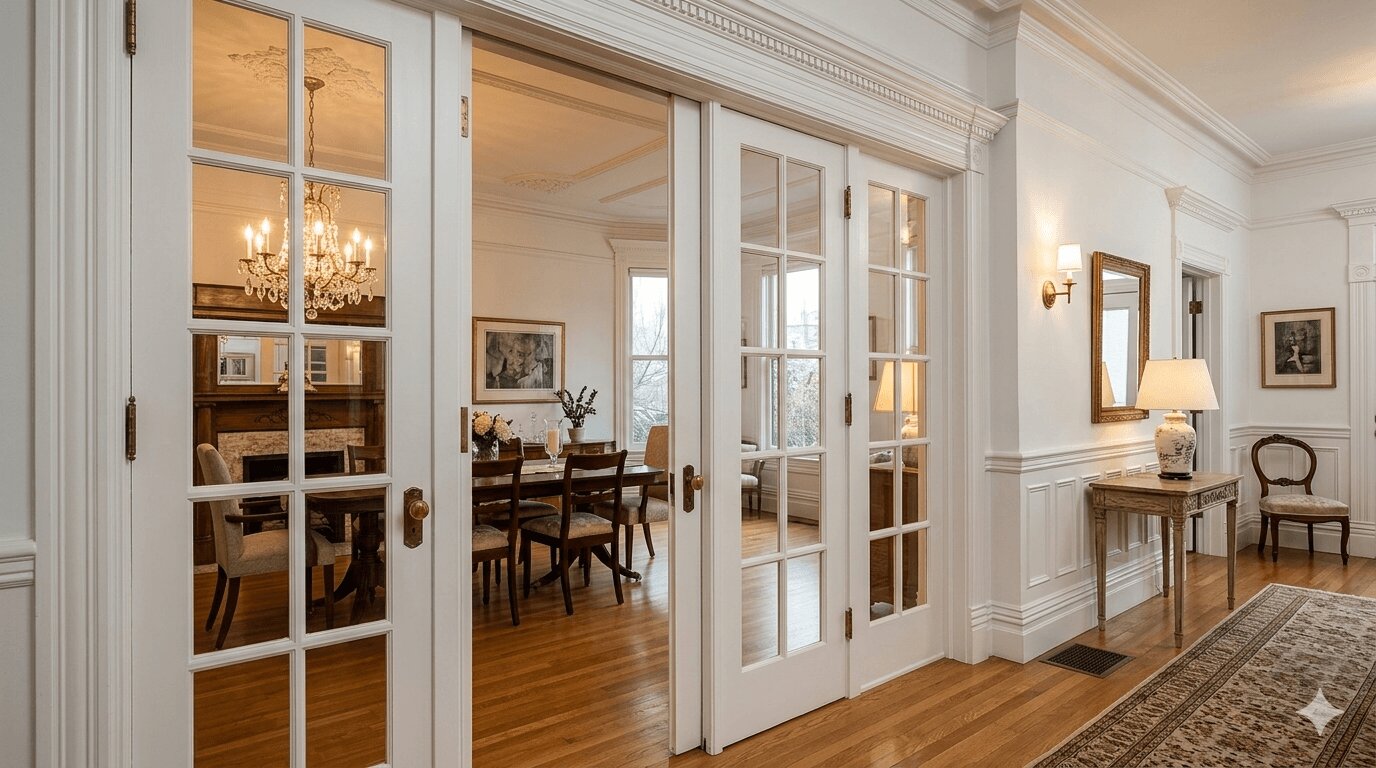
French doors usually show up as patio doors, connecting kitchens or living rooms to decks. They also look amazing as interior doors, especially when a home renovation calls for rooms to feel open but still defined.
Double doors serve broad purposes. They’re popular entryway doors, used for exterior doors where presence matters, or interior doors leading into offices and formal dining rooms. Some double door setups are all solid doors, built thick for insulation and security.
The difference between double doors and French doors becomes practical in San Francisco flats where square footage runs tight. French doors help small rooms breathe. Double doors sometimes better suit grand foyers in larger Bay Area houses.
Style and Aesthetic Considerations
From an architectural style standpoint, French doors carry a graceful, European look. They pair amazingly with Victorian homes scattered across San Francisco hills, and they slide right into contemporary design too.
Double doors offer a wider sweep of door styles. From rustic plank builds to sleek modern slabs, a double door can fit nearly any exterior doors plan. Door design becomes a statement piece, especially in neighborhoods across the Bay Area where people want everything to look both precious and expensive.
Choosing between French door vs double door ain’t only about mechanics. It’s also about character.
Functionality and Space Requirements
Both are hinged doors, so swing clearance needs reckoning. In compact San Francisco condos, that arc of movement can dictate furniture placement.
Some French doors allow both panels to swing free. Certain double doors fix one leaf and operate the other. That door configuration changes airflow and accessibility. For larger Bay Area properties, wide-swinging French doors feel luxurious. For tighter quarters, careful installation ensures function without cramping the room.
Energy Efficiency and Insulation Factors
When speaking of exterior doors, energy efficiency stands tall. Glass-heavy French doors once lagged behind solid doors in insulation, but modern glazing has come a long way.
Today’s French doors use insulated glass panes, tight weather-stripping, and layered glazing to improve thermal performance. Still, solid double doors naturally offer stronger insulation thanks to reduced glass surface.
Window Replacement Center makes sure all options meet California standards, including Title 24 requirements. Whether French doors or double doors are chosen, proper installation plays a very important role in long-term energy efficiency.
Making the Right Choice for Your Bay Area Home
So how does a homeowner choose between French doors and double doors? First consider the purpose. For patio doors meant to flood rooms with natural light, French doors shine. For front-facing exterior doors demanding stout security and added privacy, solid double doors may serve better.
In the Bay Area climate — mild but coastal — insulation and durability matter a lot. Window Replacement Center works alongside Milgard to provide solutions tailored to each architectural style. From Victorian restorations to sleek contemporary design builds, the right installation ensures comfort and compliance.
The difference between double doors and French doors becomes clearer when weighing light, insulation, privacy, and security all together.
FAQ
Are all French doors considered double doors, or are they different categories?
All French doors fall under the double doors category. Not all double doors qualify as French doors.
Which is more secure for exterior use — French doors or solid double doors?
Solid doors generally provide higher levels of home security. Reinforced French doors can be built sturdy as well.
Can I convert my existing double doors to French doors without changing the frame?
It depends on frame depth and support. Professional installation evaluation before any change is always a good decision.
Do French doors cost more than standard double doors in the Bay Area?
Yes, usually. Expanded glass panes and glazing costs extra, though pricing varies.
Which option provides better sound insulation for urban San Francisco properties?
Solid double doors provide perfect sound insulation. Upgraded French doors narrow the gap with advanced insulation systems.
Glass usually looks safe and reliable. It usually is safe and reliable. Until it breaks. The panel in your bathroom might appear identical to the one across the living room — the way it breaks can change everything in a split second. It’s all about safety, cost, and making decisions that hold up under real life in San Francisco.
Appearance isn’t the only thing to judge the glass by. Strength, breakage patterns, local codes, and long-term practicality matter a lot. Here we will explain the way different glass types perform, where they are required, and when paying more actually makes sense.
What Makes Tempered Glass Different
It starts with heat treatment. Tempered glass is heated to extreme temperatures and then rapidly cooled — it creates internal compression and tension that permanently alter its structure. That’s what makes glass stronger. Precisely added internal stress. Usually tempered glass is four to five times stronger than annealed glass, which is the technical term for regular glass in its untreated state. That’s the core difference between tempered and regular glass.
It’s not only about resisting impact damage. The breakage pattern of tempered glass grants less harm to everyone around. It breaks into dice, not daggers. The tiny fragments still scatter, sure. Though it’s impossible to get a life-threatening injury this way. That is the safety principle behind safety glass.
By contrast, non-tempered glass — often called non tempered or annealed glass — breaks into long, dangerous pieces. When comparing tempered glass vs regular glass, the visual difference during failure is unmistakable. One crumbles. The other can shatter into dagger-like fragments.
Another critical point in the tempered vs non tempered glass discussion is modification. Once tempered glass goes through heat treatment, it cannot be cut, drilled, or reshaped. Attempting cutting glass after tempering will cause it to shatter immediately. That limitation affects repairs. A single chip at the edge may require full window replacement because modification is impossible.
Homeowners often weigh tempered glass vs regular glass without realizing this permanence. Regular glass can be resized before installation. Tempered glass cannot. The strength is impressive. The rigidity is final.
When Building Codes Require Tempered Glass
In California, building codes are clear about where safety glass must be installed. This is not optional decoration — it’s about glass safety and code compliance. The California code requires tempered glass in hazardous locations where human impact is more likely.
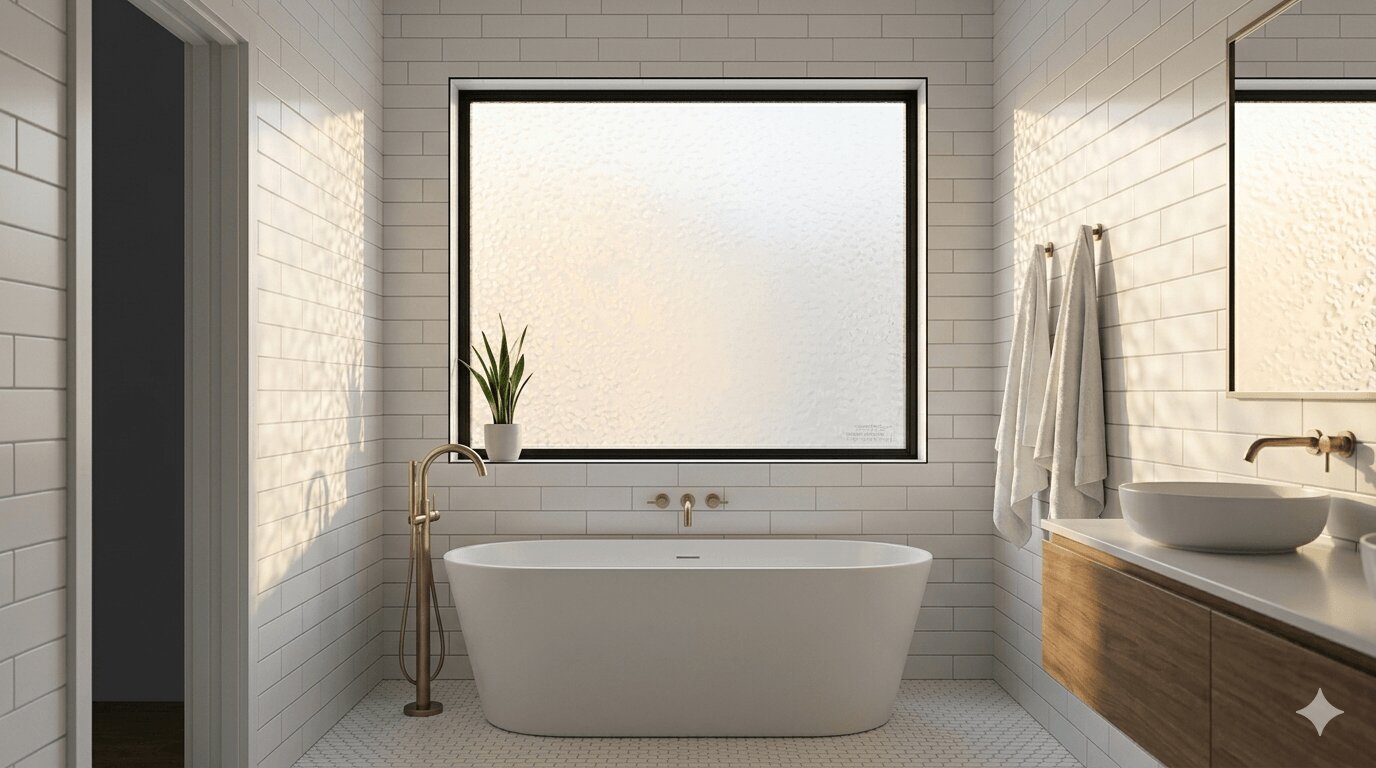
In San Francisco and throughout the Bay Area, tempered glass is mandatory in door glass panels, including sliding doors and entry doors. Any windows within 24 inches of a door’s vertical edge typically fall under the same building requirements. Bathroom windows? Same requirements if they’re located near tubs or showers.
Stairs or landings, ground-level windows — safety glass standards require glass panels to be tempered to be installed there. It’s because when a person stumbles, falls, or pushes against a pane, they should only get hurt, not injured. Simple logic, no hidden catch there.
Second-story residential windows? No glass type requirements here unless they meet specific size and proximity thresholds. Though it’s obvious why lots of people in San Francisco choose tempered glass windows in high-traffic areas. Safety always matters.
Old Bay Area homes often have non-tempered glass windows. Not a surprise since they’re older than modern building codes. During renovation, bringing those areas into compliance becomes necessary. Our window replacement teams regularly identify older annealed glass beyond current standards.
Understanding tempered vs non tempered glass within the framework of local building codes prevents costly rework later. Code compliance is not just bureaucratic detail. It shapes real installation decisions.
Tempered vs Non-Tempered: Cost, Benefits, and Limitations
Cost is often the first practical question. Tempered glass typically costs 20%–40% more than non-tempered glass, depending on size and configuration. That difference affects overall replacement cost during large window replacement projects.
Yet tempered glass does not automatically mean better in every situation. For small, high-mounted residential windows far from impact zones, regular glass can be perfectly acceptable and fully compliant. In such cases, the difference between tempered and regular glass has little functional impact.
Tempered glass windows shine where impact resistance matters — near doors, in bathrooms, and in ground-level windows exposed to activity. They offer increased durability and improved glass safety. However, they do not necessarily provide superior break-in protection. While stronger, they can still shatter under deliberate force.
Another misconception in tempered glass vs regular glass comparisons involves energy efficiency. Both types are fine for double-pane glass configurations. Energy efficiency remains mostly the same, though. It depends more on insulation, gas fills, and frame design than on whether the pane is tempered or non tempered. Tempered glass windows don’t insulate better. Extra safety is all they provide.
Repair possibility is zero when the glass in question is tempered. It must be replaced entirely. Non tempered glass can be drilled and cut — replacement is a better choice anyway. Glass repair is always a sensitive topic.
Brands such as Milgard offer multiple window glass types. Safety, durability, and budget define the options every customer is given. Installation quality affects performance. It’s a job for skilled professionals only.
FAQ
How can I tell if my existing windows have tempered glass?
Look for a small etched stamp in a corner of the pane. Tempered glass compliance with safety standards is usually indicated on special marks.
Does tempered glass prevent break-ins better than regular glass?
It offers greater impact resistance and strength, sure. It’s not bulletproof, though. It improves safety more than break-in protection.
Can tempered glass be repaired if it cracks?
Well, if it cracks it immediately shatters. Nothing to repair in that case.
Is all double-pane glass automatically tempered?
Double-pane glass refers to insulation structure, not safety treatment. Either pane may be regular glass or tempered depending on location requirements.
Do I need tempered glass for second-story windows?
It’s not a legal requirement, so choosing the type it’s up to you. Official requirements depend on placement and potential fall hazards.
City living has its perks, and then there’s the 5:30 a.m. delivery truck idling under the bedroom window. In San Francisco, street noise has a way of slipping through glass like it pays rent. Blocking noise isn’t just about comfort. It’s about reclaiming peace and quiet in the middle of urban living.
This is why understanding the way soundproof windows work means a lot. It lets you decide what to pay for and what is really optional. Also it becomes more obvious what defines quality. Peace and quiet matters a lot today.
The Reasons Why Your Windows Let In So Much Noise
Many Bay Area homes were built long before anyone talked seriously about noise pollution. Victorian architecture is charming, sure. Though it usually means single-pane glass, aging window frames, and thin materials that do very little for sound insulation. The original details look astonishing. They are not designed for modern traffic noise, though.
Single-pane windows transmit vibration easily, allowing exterior noise to pass straight through. Add deteriorating window seals, minor window gaps, and shrinking wood frames, and suddenly the issue multiplies. Noise transmission thrives in small cracks. It only needs space.
Older installation methods can also leave subtle air gaps between the frame and wall cavity. Over time, those gaps widen. The result is consistent sound leakage, especially in densely populated parts of San Francisco where street noise is constant rather than occasional.
For homeowners wondering how to block traffic noise from window openings that seem impossible to quiet, the answer often begins with diagnosis. Look at the glass type. Inspect the window frames. Check the seals. The problem is rarely mysterious. It’s structural.
Window Replacement: The Most Effective Solution
When serious window noise reduction is the goal, window replacement remains the most reliable long-term answer. Modern replacement windows are engineered specifically to reduce window noise through improved materials and tighter installation standards.
People choose double-pane windows for a reason. Two layers of glass separated by air gaps — that’s sound insulation classics. Vibration stops, the silence remains. Single-pane units can’t do this trick. Triple-pane windows go even further, adding an extra air gaps barrier that increases mass and dampens sound waves even more.
For zones where noise pollution should be reduced to zero, laminated glass shows top-tier results. It has a sound-dampening interlayer that absorbs vibration before it enters the room. If the laminated glass thickness is right it can reduce noise from outside window surfaces to an absolute minimum.
Understanding the STC rating is essential. Those letters mean sound transmission class. A higher STC rating means better window noise reduction in real-world conditions. Moving from older single-pane units to modern noise reduction windows can produce noticeable decibel reduction — sometimes reducing perceived traffic noise nearly in half.
In San Francisco, many homeowners turn to Milgard windows. It is a perfectly engineered solution offering both durability and acoustic performance. Milgard windows are tested for structural integrity and sound control, making them suitable for Bay Area homes.
Top-tier soundproof windows require proper handling. Professional installation ensures tight seals, proper frame alignment, and optimal window performance. This is what we proudly offer. Energy efficient windows, soundproofing windows, all done properly. Structural upgrades, not just window replacement routines.
Soundproofing Methods That Actually Work
Full window replacement isn’t the only option. Supplemental soundproofing solutions successfully block noise from windows. If done right.
Window inserts are interior panes put behind existing glass. They hold the air that stops the vibrations. A fresh set of replacement windows is a stronger option, while window inserts is a cheaper way to reduce window noise.
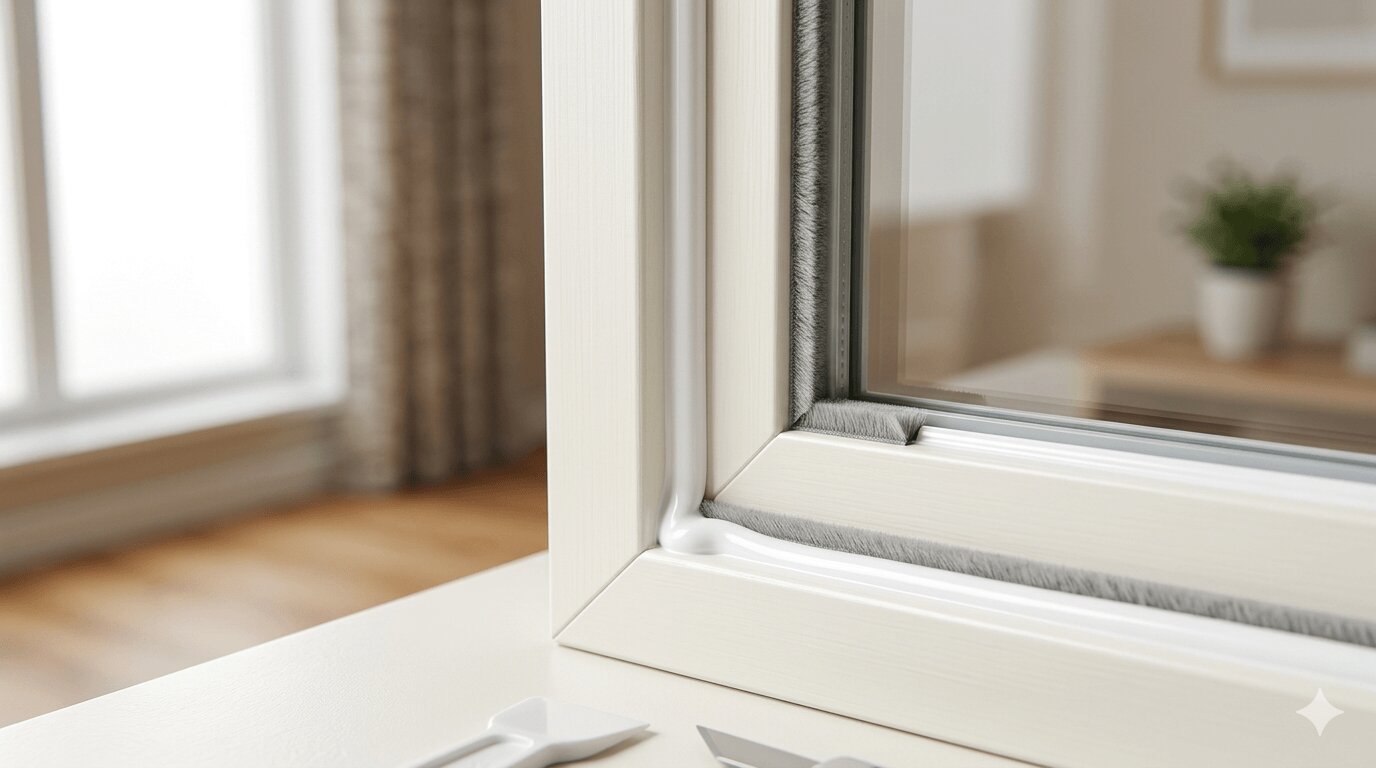
Replacing weatherstripping tightens the assembly and improves window seals without major construction. It is another way to reduce noise from outside window frames. Worn weatherstripping leaves subtle openings that allow noise transmission.
Strategic caulking around visible window gaps can prevent sound leaks at the perimeter. It is not glamorous work. It is effective.
Acoustic curtains provide limited assistance. They absorb some sound reflections inside the room but do not truly block outside noise window intrusion at the structural level. They are supplemental, not transformative.
Homeowners asking how to block noise from window structures without replacing them is what we see every week. We offer methods that help reduce window noise, sure. Yet certified acoustic windows or full window replacement is always a priority.
When noise control becomes a daily concern — soundproof windows offer a more permanent solution. Temporary fixes can soften the edges of exterior noise. Replacement addresses the core.
FAQ
Do double-pane windows really block noise better than single-pane?
Yes. Double-pane windows create an insulated barrier using air gaps between two glass layers. It stops noise transmission better than any single-pane designs. Sound insulation gets improved and it’s a decent solution for windows exposed to steady street noise.
What’s the best type of glass for soundproofing windows?
Laminated glass is the most effective option since the interlayer absorbs vibration. When glass is thick and STC rating is high, laminated glass enhances window noise reduction a lot.
Can I soundproof old windows without replacing them?
It is possible. We soundproof old windows using window inserts, upgraded weatherstripping, improved window seals, and strategic caulking. It helps to reduce noise from outside window areas, though they do not deliver the same results as full window replacement or advanced noise reduction windows.
How much noise reduction can I expect from new windows?
Speaking of decibel reduction. Upgrading to modern soundproof windows with higher sound transmission class is the right option. This way traffic noise usually drops by 40%–50% compared to aging single-pane units. Performance depends on installation quality and surrounding wall construction, of course.
Are soundproof windows worth the investment in San Francisco?
In neighborhoods affected by consistent street noise and dense urban activity, soundproof windows justify their cost. Improved home comfort, increased property value — for many Bay Area homes, professional installation of replacement windows becomes a really vital upgrade.
French doors vs bifold comparison isn’t about a design choice. It’s a lifestyle move. Pick the wrong option and you’re bumping into panels you hate for the next fifteen years. Pick the right one and your house feels amazingly different.
Some doors just close off a room. Others completely change the way you live there. The right system can open up walls, free up tight corners, or make a patio feel twice its size. Let’s break down what really matters before you start making any calls.
Bifold vs French Doors: Understanding the Fundamental Differences
So first things first — bifold vs french doors comparison comes down to mechanics.
Bifold doors fold up in sections. A track system lets them glide. They stack to one side, looking neatly futuristic. That’s a perfect space-saving move.
French doors? They’re classic hinged doors. Two panels. They swing open from the center. Simple, symmetrical, and actually timeless.
When Bay Area homeowners start debating whether bifold or french doors are better, it’s usually about their personal preferences. Some want to open up a wall. That’s bifold territory. Others want to add elegance to their dining rooms — that’s what French doors are perfect for.
In San Francisco where square footage ain’t cheap, this choice matters.
Space Efficiency and Opening Width Comparison
Now let’s talk about space. Real estate math.
In the bifold vs french doors debate, the space-saving argument is usually won by bifolds. They fold against themselves. They barely take any floor space at all. They don’t require no swing clearance arcs.
That matters a lot in compact San Francisco homes. Tiny patios. Narrow kitchens. Tight layouts. You know what we’re talking about.
But here’s the thing — when fully opened, bifold doors can create a near full-width opening. That’s fantastic. That’s entertaining-ready.
French doors, on the other hand, split the access down the middle. Still classy. Still functional. But not wall-disappearing.
So when people do the french doors vs bifold comparison, they’re really choosing between elegance and space.
Interior Applications: Closets, Laundry, and Room Dividers
Now we get into the everyday stuff. Closets.
The bifold vs french closet doors disputes happen constantly. Traditional closet doors are usually bifold doors. It’s simply because they’re practical. They fold tightly. They’re efficient. They’re built for small bedroom layouts.
When doing the bifold vs french closet doors comparison, bifolds usually take it for functionality. French doors look great, but they need room to swing. Interior doors between living spaces? French doors are a decent choice. Great as room dividers that let natural light in but still define space. Closets? Choose bifold doors. Formal transitions? Maybe a French door setup would look better.
That’s how everything changes depending on the job.
Exterior Patio Applications: Opening to the Outdoors
Now about patios. In the Bay Area — especially San Francisco where the weather’s mild — people love that indoor-outdoor transition. And this is where bifold doors really stand out.
They’re what we call stacking doors. Panels fold, stack, and suddenly your whole living room’s connected to the yard.
French doors as patio doors? They’re elegant. Balanced. Great for traditional homes. But they don’t disappear like bifold doors do.
From a weather performance standpoint, both options can perform well. Energy efficiency depends on sealing, glazing, and hardware quality.
Window Replacement Center helps Bay Area homeowners dial in the right exterior doors for their microclimate every month. We do everything the right way.
Cost Analysis: Investment and Value
Let’s get honest about money. In a Bay Area cost comparison, bifold doors usually come in higher. More complex hardware. Bigger openings. More detailed door installation.
French doors are generally less complicated. Still premium if you choose high-end materials, but simpler systems.
Now here’s the kicker — bifold doors can increase home value when done right in modern builds. In sleek San Francisco remodels, they scream high-end.
French doors boost curb appeal, especially on Victorian homes across the Bay Area.
So in the bifold vs french doors price debate, bifolds cost more upfront, but sometimes that investment makes sense.
Maintenance, Durability, and Hardware
Now maintenance talk. Bifold doors rely on a track system. You gotta keep it clean. Dirt in the track is difficult to ignore.
French doors? It’s only about hinges and compression seals. Less moving hardware overall. Fewer small rollers. In coastal Bay Area air, hardware matters. Salt can mess with exterior doors over time. Regular maintenance extends their life.
In terms of long-term durability both systems perform well when properly installed. But bifold door setups do have more moving parts. Everything depends on how much upkeep you can afford.
Style and Architectural Compatibility
Speaking about vibes. French doors are perfect for traditional architectural style homes. Victorian homes in San Francisco? French doors fit like they’ve always been there.
Bifold doors give total contemporary design atmosphere. Clean lines. Minimalist feel. Big glass. Modern Bay Area builds love that look.
Both offer solid glass options for letting as much natural light in as possible. But bifolds feel sleek. French doors feel classic.
When you need to decide between bifold or french doors, remember that it’s about whether your house gives either historic charm vibes or modern statement ones. Window Replacement Center works with Bay Area homeowners to match door systems to every house. It looks impressive if done by us. People trust us for a reason.
FAQ
Are bifold doors more expensive than French doors in the Bay Area?
Usually, yes. More hardware, more complexity, higher install cost.
Which door type provides better security for exterior applications?
Both can be secure with quality locking systems and professional installation.
Can I install bifold doors in the same opening as existing French doors?
Sometimes. Structural adjustments are usually required.
Do bifold doors require more maintenance than traditional French doors?
Yes. Track cleaning and hardware checks are more frequent.
Which option is better for maximizing natural light in San Francisco homes?
Both bring in natural light, but bifold doors can create wider uninterrupted openings.
Glass and grids may look immaculate, though no glass defines how long things would look all pretty. It’s about the bones holding it steady. The window frame decides if you’re warm in January or watching your heat money float clean off into the night. In this friendly guide we’ll sort through these types of window frames the honest way.
When you start comparing window frame materials, it can feel like somebody dumped a hardware store on the table. There’s vinyl, wood, aluminum, fiberglass, composite. All claiming they’re the best window frame material. Truth is, each one’s got its own temperament. And when you’re looking at replacement windows, that choice matters more than most people realize.
What Are Window Frames and Why Material Matters
A window frame is the backbone of the whole setup. It holds the glass, keeps the sash steady, seals out moisture, and anchors the unit during window installation. If that window frame fails, you’re dealing with leaks, rot, and debts.
Different window frame materials react differently to moisture, heat, cold, expansion, and contraction. Some handle warping better. Some fight off rot easily. Some need more frame maintenance than a classic truck.
When you’re comparing window frame types, you have to look past color and shine. Think about thermal performance. About insulation properties. About window longevity. That’s what makes energy efficient windows actually efficient.
Vinyl Window Frames: Affordable and Low-Maintenance Ones
Vinyl window frames can be seen everywhere for a reason. They’re affordable. They’re practical. They’re about as close as you get to low maintenance windows in this business.
Most vinyl window frames resist moisture, don’t need paint, and hold up decent over time. Their insulation properties are solid thanks to chambered construction, and that helps with energy efficiency in everyday homes.
When people talk about replacement windows, vinyl window frames dominate that conversation. The cost stays manageable, and the price makes sense for most budgets. Though vinyl window frames can have limited color options. Strong sun over years can test their UV resistance. Lower-quality ones might show warping if installed the wrong way.
For many homeowners, vinyl window frames are the best window frame material when budget and low maintenance windows top the list.
Wood Window Frames: Classic Beauty with Modern Performance
Now wood window frames, that’s tradition right there. Warm grain, natural finish, real curb appeal. You put good wood windows in a home and the resale value can climb alright.
From a performance standpoint, wood window frames bring excellent insulation properties and respectable thermal performance. They help build truly energy efficient windows when maintained right. But wood demands to be treated with extra care. Moisture can creep in. Rot can set up if paint or finish peels off. Frame maintenance is part of the deal: sanding, sealing, fresh paint when needed.
Modern wood window frames sometimes come clad on the outside to ease maintenance, but pure wood windows still require care. For historic homes or statement builds, though, they’re worth the investment.
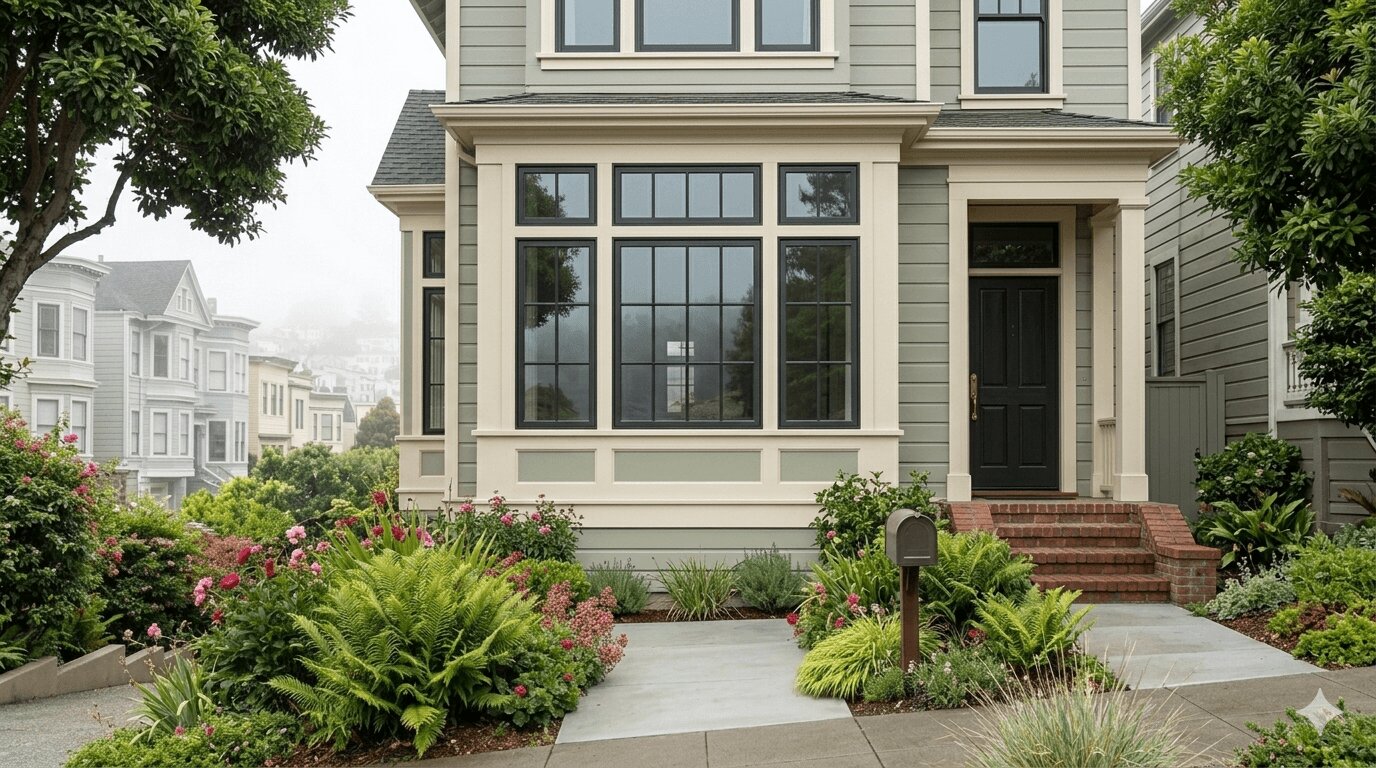
Aluminum Window Frames: Sleek and Strong
Aluminum window frames are lean and strong. Good structural integrity, slim lines, lots of glass view. You’ll see them in modern builds and commercial setups.
The strength-to-weight ratio’s impressive. But aluminum conducts heat, which means thermal performance ain’t naturally its advantage unless there’s a thermal break built in. Aluminum window frames resist UV exposure well and hold shape over time. In dry climates they shine. In coastal climate windows settings, protective coatings help fight off corrosion from moisture.
They’re durable, no doubt. The only issue is choosing insulation properties over style.
Fiberglass Window Frames: Premium Durability
Fiberglass window frames are very durable. They expand and contract nearly the same as glass, which cuts down stress at the seals. Their insulation properties rank high. Thermal performance is strong. They resist moisture and rot better than most materials. Condensation resistance is another advantage.
Fiberglass window frames usually carry a higher cost and price tag, but the window longevity is impressive. When customers ask us about the best window frame material for long haul durability, we usually put fiberglass window frames near the top. Not cheap. But steady.
Composite Window Frames: Best of Both Worlds
Composite window frames mix wood fibers with polymers, sort of engineered for balance. You get some of the warmth of wood window frames with improved weather resistance.
Composite window frames handle moisture better than traditional wood. They don’t rot easy, and frame maintenance is lighter than full wood windows.
In a solid frame materials comparison, composite window frames sit between vinyl and fiberglass on cost and performance. For homeowners putting budget against durability, they make a strong middle-road investment.
Comparing Window Frame Materials: Performance and Cost
Let’s lay it out plain in this frame materials comparison. Vinyl window frames are good for lowest cost, strong energy efficiency, and minimal maintenance. Wood window frames are good for the highest aesthetic value, need more maintenance, and deliver good insulation.
Aluminum window frames are sleek, durable, and give moderate insulation. Fiberglass window frames mean premium durability, strong thermal performance, and higher price.
Composite window frames offer balanced durability and performance.
When evaluating window frame materials, look at window durability, window longevity, and long-term investment return. Sticker price doesn’t usually mean a thing.
Energy efficiency ain’t just glass ratings. That window frame plays a role in the U-factor and overall R-value of energy efficient windows. And remember, proper window installation matters just as much as material choice. A great frame installed poorly won’t hold up. Protect that window warranty by doing it right.
Choosing the Right Window Frame Material for Bay Area Homes
Now if we’re speaking about Bay Area windows that mix of coastal air and inland heat is a thing to consider first. Vinyl window frames fit tight budgets, those are low maintenance windows. Wood window frames shine in historic neighborhoods where charm matters most.
Aluminum window frames look modern, clean, and industrial. Fiberglass window frames handle wild weather swings and heavy moisture like they were built for it. Composite window frames offer a middle ground for families looking to balance cost and durability.
Whether you’re replacing double-hung windows or casement windows, match the window frame to climate, design, and long-term home improvement goals. At the end of it all, the types of window frames you choose shape your home’s comfort, value, and upkeep. Pick carefully. It’s an investment, not a quick fix.
FAQ
What is the most energy-efficient window frame material?
Fiberglass window frames often lead in thermal performance and insulation properties.
How long do different window frame materials last?
Vinyl window frames can run 20 to 30 years. Wood window frames last decades with care. Fiberglass window frames often exceed 40 years.
Can I paint vinyl window frames?
Most vinyl window frames aren’t meant for standard paint, though specialty finish products exist.
Which window frame material requires the least maintenance?
Vinyl window frames and fiberglass window frames qualify as low maintenance windows.
Are wood windows worth the extra cost?
For aesthetics, resale value, and traditional appeal, wood window frames can be a worthy long-term investment. If you’re ready for the maintenance.