People usually think swapping out a window is a simple job. But somewhere between that old frame and the studs hiding in your walls, the choice gets real expensive real quick. Pick the wrong option and you’ll feel it every winter when that wind comes slipping through like it owns the place.
Speaking about retrofit vs new construction windows comparison, the key difference is how deep you want to cut into your house. The more changes you want the more obvious one of two options gets. The whole retrofit vs new construction debate comes down to either keeping the old window frame, or pulling it clean out and installing the new one.
Understanding Retrofit and New Construction Windows
Here’s the backbone of it. Retrofit windows, sometimes called replacement windows, slide into your existing frame. You leave that old window frame sitting there long as it’s solid. No tearing up siding. No busting up drywall unless something’s wrong.
New construction windows, though, come with a nail fin wrapped around the edges. That nail fin fastens straight to the studs. Means the old frame usually comes out. Means you’re openin’ up the window opening all the way down to the bones.
That’s the difference between new construction vs retrofit in a nutshell. One works with what’s there. The other starts from scratch.
What Are Retrofit Windows and How Do They Work?
Customers ask us sometimes about “what are retrofit windows”. They’re built for pocket replacement. That means the new unit fits inside the existing frame like it was made for it. You don’t disturb the exterior siding or the stucco. Around the Bay Area, that stucco ain’t something you want to get rid of if you don’t have to.
A flush fin retrofit window adds a slim outer lip that covers the edge of the old frame. Real handy with stucco homes. A block frame unit slides straight into the opening without that extra flange.
The beauty of retrofit window installation is how little mess it makes. The installation process usually leaves the exterior siding alone. Drywall stays mostly untouched. Trim stays put. For clean, straightforward window replacement, retrofit windows shine.
And when folks compare retrofit vs replacement windows, half the time they’re just mixing up terminology. Retrofit windows are a type of replacement windows. It’s about that installation method.
What Are New Construction Windows and When Are They Used
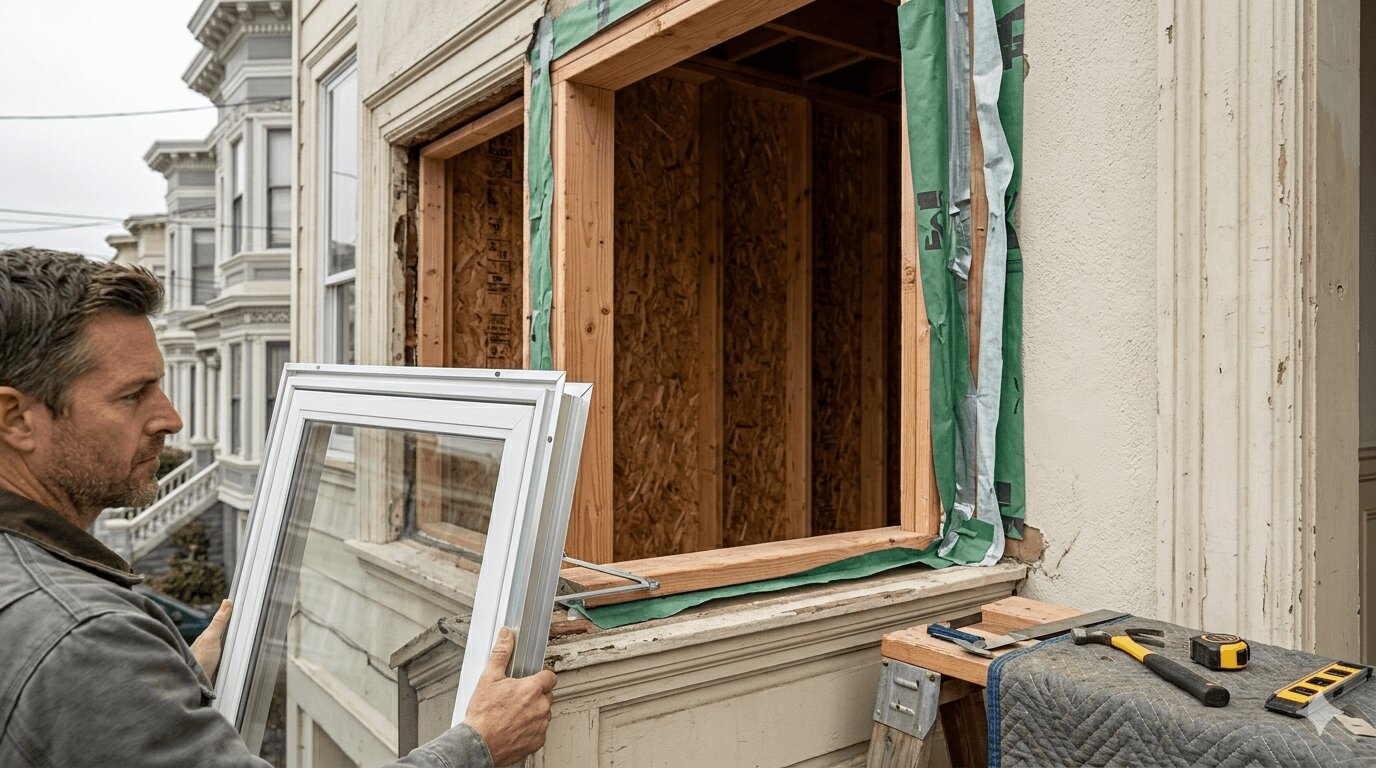
Now let’s talk about new construction windows. These come with that nail fin, and that nail fin attaches straight to studs after the old frame’s gone. During new construction window installation, you strip back siding or stucco, expose wall sheathing, tie in the moisture barrier proper for weatherproofing.
That means more labor costs. More time. More opportunity to fix hidden rot if it’s there. You use new construction windows for new builds, big remodeling jobs, or full frame replacement when the old window frame is shot. If the existing frame’s rotted or warped, retrofit windows ain’t gonna save you.
And if you’re changing the size of the window opening, maybe widening it for more light, you need new construction windows for that kind of design flexibility. That’s where new construction vs retrofit ain’t even a debate. Structure decides for you.
Cost Comparison: Retrofit vs. New Construction Installation
Let’s talk about dollars. The actual window units often cost about the same. Retrofit windows or new construction windows, doesn’t matter. But the installation cost? That’s where the split happens.
Retrofit window installation keeps labor costs lower. You’re not tearing off siding, not replacing trim all around, not messing with drywall much. New construction window installation costs more. Could be fifty to a hundred percent more. You’re pulling siding, patching stucco, replacing trim, sealing back up the moisture barrier. That full frame replacement adds up.
In any honest cost comparison, labor costs make the loudest noise.
Installation Process and Timeline Differences
Installing retrofit windows usually takes one to two hours apiece. It’s the whole house done in a day or two. That’s a gentle kind of home improvement since you can still cook dinner in peace.
New construction windows take more time. Three to four hours per window opening. The whole job might run three to five days, depending on siding repairs and weatherproofing work. The installation process is heavier. You’re dealing with studs, wall sheathing, siding replacement, and trim rebuilding.
If speed matters, retrofit windows win that round.
When to Choose Retrofit Windows for Your Project
Pick retrofit windows when your existing frame’s solid and square. If you’re not changing the size of the window opening and just want better energy efficiency, it’s a smart play.
For Bay Area homes preparing for sale, replacement windows through retrofit window installation boost curb appeal and resale value without the mess.
If you don’t wanna disturb siding or stucco retrofit windows are usually the smoother road.
When New Construction Windows Make Sense
If the existing window frame is rotted, or you’re in the middle of a big renovation or remodeling job, new construction windows are the right choice. Full frame replacement lets you inspect everything. Replace damaged studs if needed. Integrate flashing and moisture barrier right. That nail fin locks it all tight to the structure.
You also get maximum design flexibility. Bigger glass. Different shapes. New layouts. That’s something retrofit windows just can’t offer. For new builds in San Francisco or anywhere in the Bay Area, new construction windows are standard practice.
Energy Efficiency and Performance Considerations
Truth is, both window types can deliver strong energy efficiency. New construction window installation does offer superior weatherproofing because that nail fin integrates directly with studs and moisture barrier layers.
But retrofit windows can show excellent energy efficiency too. As long as the existing frame’s in good shape and the installation method is done right.
Good glass matters. Tight seals matter. A skilled window contractor matters most.
Making the Right Choice for Your Bay Area Home
In older San Francisco neighborhoods, people usually prefer retrofit window installation to preserve original trim and architectural style. In full remodeling jobs, new construction windows often make more sense. Budget. Timeline. Structural condition. Those three things decide most cases.
Brands like Milgard offer strong lines for both retrofit windows and new construction windows, so product choice ain’t the limit but your house’s bones are. At the end of the day, the retrofit vs new construction windows question ain’t about which is better. It’s about what your home actually needs.
FAQ
Are retrofit windows as good as new construction windows?
They can be, if the existing frame is solid and retrofit window installation is done correctly.
Can I install new construction windows in an existing home?
Yes. Especially during renovation or full frame replacement projects.
How much does retrofit window installation cost compared to new construction?
Retrofit window installation usually carries lower installation cost and labor costs than new construction window installation.
Will retrofit windows fit my existing window openings?
They’re built specifically for that — designed to fit within the existing frame during window replacement.
Do new construction windows provide better energy efficiency than retrofit?
New construction windows may offer stronger structural sealing, but both window types can deliver excellent energy efficiency with proper window installation.
Ready for a Consultation?
Get a Free Estimate Today!